How Chad Nathan Is Building an Artistic Archive Rather Than a Career
In an era where artists are told to chase algorithms, build personal brands, and turn every hobby into a revenue stream, Chad Nathan has quietly chosen a different path.
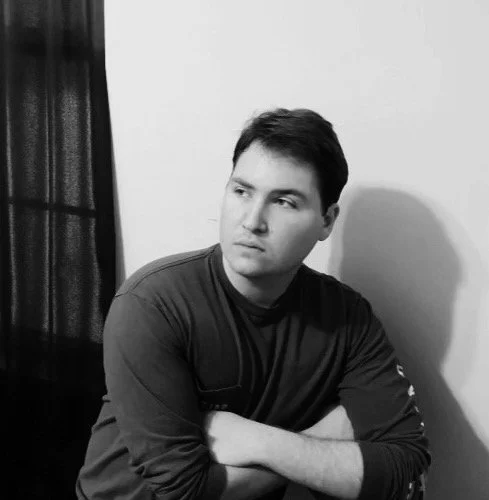
Chad Nathan isn't trying to become famous.
He isn't chasing viral moments.
He isn't creating to maximize profit.
Instead, he is building an artistic archive of a life lived with intention.
Since 2015, Nathan has released music, published books, written essays and poetry, captured thousands of photographs, and documented ordinary moments with remarkable consistency. Taken individually, each project tells a small story. Viewed together, they form something much larger, a living record of one person's spiritual, emotional, and creative journey.
It is less a career than a testimony.
That distinction matters.
Success Measured Differently
Modern creative culture often asks artists the wrong questions.
How many followers?
How many streams?
How much revenue?
Nathan seems interested in a different set of questions.
Did I create today?
Did I tell the truth?
Did this point someone toward hope?
Did I steward the gifts God gave me?
Those questions shape nearly everything he produces.
Across his music, writing, photography, and books runs a consistent thread: ordinary moments matter. A rainy afternoon, an empty street, a quiet prayer, a journal entry, a sunrise, these are not distractions from life. They are life.
His work suggests that beauty is not something to be manufactured but something to be noticed.
An Archive Rather Than a Portfolio
Most artists are encouraged to build portfolios.
Nathan appears to be building an archive.
A portfolio is designed to impress. It is carefully edited, polished, and optimized to showcase only the best work.
An archive is different.
It preserves seasons.
Growth.
Questions.
Failures.
Victories.
The ordinary days that rarely make headlines but quietly shape a person over time.
His expansive catalog reflects that philosophy. Instead of waiting for the "perfect" project, he continues creating, allowing each piece to become another page in a much larger story.
The result feels less like a collection of products and more like an ongoing journal spanning years.
Creativity Without Commercial Pressure
Perhaps the most unusual part of Nathan's story is that creativity is not his profession.
While maintaining a regular office job, he continues to write, photograph, compose music, publish books, and invest in creative work during the hours he could reserve for rest or entertainment.
That decision changes the way his work is perceived.
Because his livelihood does not depend on his art, he is free to create without asking whether every project will sell.
There is no pressure to follow trends.
No obligation to chase whatever style is currently popular.
No need to manufacture controversy for attention.
His work exists because he believes it is worth making.
In a culture that often equates value with profitability, that is a quietly radical position.
A Calling Greater Than Creativity
For Nathan, however, even creativity is not the ultimate destination.
Alongside his artistic work, he is studying Christian ministry at North Greenville University, pursuing preparation for what he believes is God's calling on his life: pastoral ministry.
That calling places his creative output in a different light.
Rather than competing with ministry, his music, writing, and photography become extensions of it.
They are acts of encouragement.
Acts of reflection.
Acts of service.
Whether through a song, a devotional thought, a photograph of an overlooked landscape, or a page of poetry, the underlying goal remains remarkably consistent: to point people toward hope, gratitude, and the presence of God.
Seen this way, the art is not the mission.
It is one expression of the mission.
The Ministry of Ordinary Faithfulness
There is something profoundly refreshing about Nathan's approach.
He has not waited until he had a large platform before serving others.
He has not postponed creating until someone gave him permission.
He has not treated everyday work as an obstacle to meaningful contribution.
Instead, he has embraced the rhythm of ordinary faithfulness.
Working.
Studying.
Creating.
Learning.
Serving.
Repeating.
It is a rhythm that mirrors the quiet faithfulness found throughout Scripture, steady, often unseen, yet deeply significant.
Leaving More Than a Legacy
When people speak about legacy, they often imagine monuments, awards, or public recognition.
Nathan's work suggests another possibility.
Perhaps legacy is simply leaving behind evidence of a life that sought to love God, serve others, and faithfully use every gift entrusted to it.
Every song becomes another chapter.
Every photograph another memory.
Every essay another reflection.
Every book another invitation to pause.
Together they form an archive, not because every individual piece is monumental, but because each contributes to a larger narrative of consistency, faith, and purpose.
Whether Chad Nathan ever becomes widely known may ultimately prove beside the point.
His life's work is not primarily an attempt to build a career.
It is an attempt to document a calling.
And if one day he steps fully into pastoral ministry, the thousands of songs, photographs, poems, books, and essays that came before will not stand apart from that vocation. They will stand behind it, bearing witness to years spent practicing the same habits that define faithful ministry: showing up, telling the truth, encouraging others, and pointing, again and again, toward Christ.
In a world obsessed with making a name for yourself, Chad Nathan is quietly trying to make a faithful life.
That may prove to be the most enduring work of all.